

Adapting Choice-Based Learning to Art Education
 November 10, 2026
Empowering students with control over their learning proves to be one of the most effective strategies in my teaching practice. As student needs and learning styles change, I adjust my approach to ensure every student feels heard, supported and successful through the creative process.
Early in my career, my instruction relied on structured, technique-focused lessons. However, many students viewed this process as definitive — believing there was a single “right” or “wrong” way to create art. My favorite student outcomes were always the ones where they pushed boundaries and took their work in unique directions.
I also realized as students grew, their confidence wavered, and they would judge their work against others, including my examples, and be harsh towards themselves. All these observations led me to researching different options for my students.
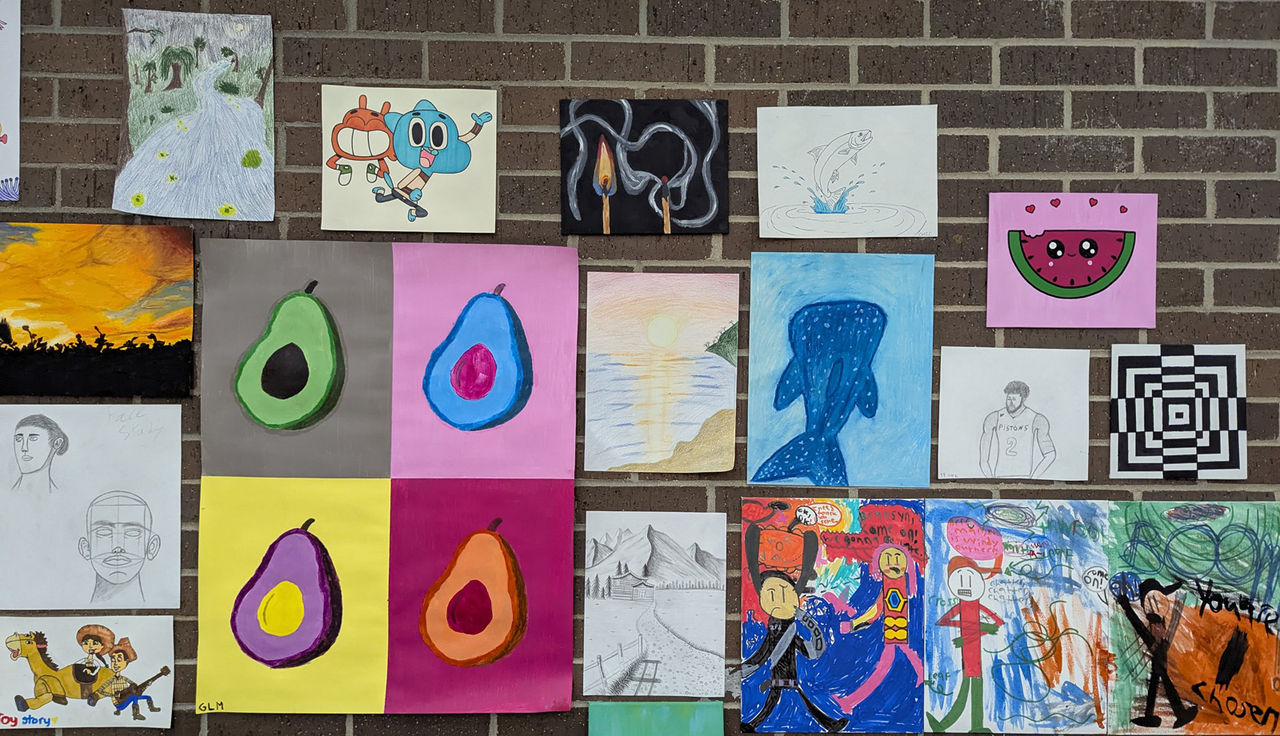
The key outcome to my research is choice-based learning. This process of instruction opens the door to many different options for my students, gives them a sense of ownership with their work, allows differentiation for a wide variety of students and helps students freely share their voices through the creative process. I was able to restructure my lessons to meet the needs of my students and create a comfortable learning environment, where they are challenged creatively, and they all had different answers to the same questions.
While completely open-ended projects can leave students without clear direction or a starting point, I developed a supportive framework that offers choice within a guided structure. This framework takes the form of an art menu — providing curated options that allow students to express their learning in the manner they choose. Additionally, I designed a final display of learning to evaluate both the finished artwork and the creative journey that produced it.
The development of this structure helps my students gain confidence in the classroom, open the projects to new and fun ideas, and gives students their own control with their learning.
The Art Menu: A Framework for Choice
To guide students through the artistic process, I structure all my lessons like a menu: appetizers, entrees and desserts. Each section targets a specific stage of the creative process while offering flexible paths tailored to student choices.
- Appetizers (inspiration & exploration): The starting point where students make decisions and try out ideas. They select between setting goals or researching an artist, followed by practicing with tools and techniques.
- Entrees (main concept & creation): The main course is the output they want to create. Students decide which ideas to explore and choose the form of artwork that best captures the essence of the theme and their personal vision.
- Desserts (application, media & display): The finishing touch. Options focus on material selection or demonstrating how they intentionally integrated the elements and principles of design within their final work.
The Final Display of Learning
Another area where I create a sense of ownership and comfort within the process of choice is in the final display of learning. Assessment extends far beyond the finished piece; it encompasses the entire creative process. To showcase their overall growth, students create a final presentation that includes:
- Appetizer: They share their starting point, the goals and/or research that guided their process.
- In-progress photos: These images capture the learning through the practice drawings, creation of the final and all the hiccups along the way.
- Peer critiques: Students connect with their peers throughout the process and discuss the direction their artwork is going.
- Artist statement: A reflection that discusses all that they went through for their piece and connects their choices to their final artwork.
- Final piece (entree & dessert): The completed artwork.
By assessing learning at each of these points, students learn to value the process as much as their final artwork.
I apply both the Art Menu framework and the Final Display of Learning across every course and lesson, customizing them to fit each class’s unique needs and themes. By establishing a consistent foundation, students gain the confidence to explore new creative ideas in every class, allowing me to continuously challenge them as they develop into independent problem solvers.
Educators looking to adopt this approach can start simple: Offer multiple output options tailored to assessment goals. With a wide range of educational tools available today, giving students ownership not only builds creative confidence in a safe space, but it also transforms the learning experience into a collaborative, engaging journey for both students and teachers.
2026-67 Michigan Regional Teacher of the Year Erica Gorzen is a visual arts teacher at Portland High School in Portland Public Schools.